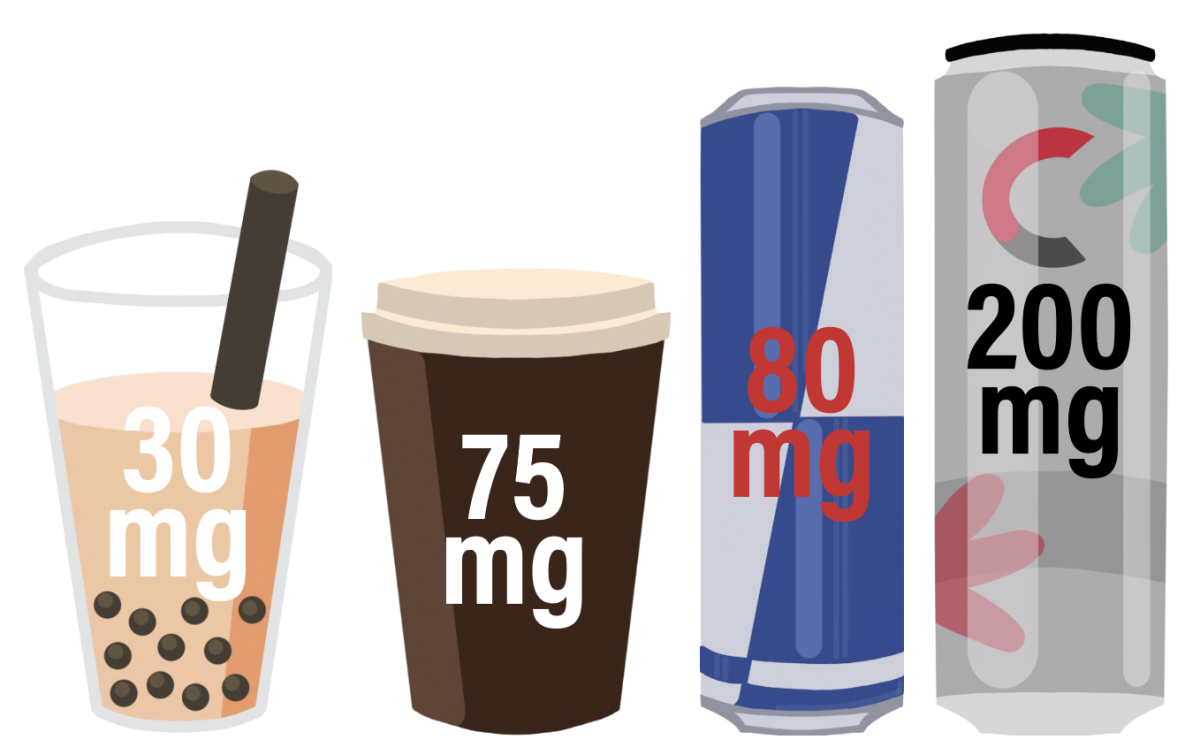
On many mornings, the checkout line at CVS is full of students buying energy drinks to start their day. Whether it is a Celsius, a latte from Peet’s Coffee or a boba drink, caffeine is an everyday indulgence for many Paly students. But what does this chemical actually do in the brain that makes it so enticing?
Jesus Garcia, a biology professor at Foothill College, explains the neurochemical effect of caffeine. According to Garcia, it increases alertness because of its interaction with signaling chemicals in the brain.
“It works by blocking adenosine receptors,” Garcia said. “It also triggers the release of other neurotransmitters like dopamine.”
Throughout the day, adenosine builds up in the brain and, eventually, high levels of this signaling molecule allow a person to fall asleep. By blocking these receptors, caffeine effectively blinds your brain to the buildup of adenosine until the caffeine has been metabolized, at which point adenosine floods the receptors.
Garcia said that with regular use, the body builds up a resistance to caffeine, leading to the “crash” caffeine drinkers may experience later in the day.
“It [caffeine] is a central nervous system stimulant,” Garcia said. “[Routine coffee drinkers] who stop drinking coffee can start getting jittery and shaky because they go through withdrawals. They get the same effects as if they were on methamphetamines for an extended period of time and then went cold turkey.”
Junior Chase Wong said he has noticed more of his peers drinking caffeine to ward off feelings of tiredness.
“They [caffeinated beverages] are popular with high schoolers because they give dopamine to your brain and they give you more energy,” Wong said. “Students see it as a way to ‘catch up on sleep’ without sleeping. It gives you the benefit of feeling more awake, but it is also harming your body.”
Junior Wilem Madwed is conducting a research project on energy drinks in his AP Seminar class and said the issue of student caffeine use can become a vicious cycle.
“The biggest problem that energy drinks cause is sleep deprivation,” Madwed said. “Specifically, [being used as] a substitution for sleep is even worse, as it creates a cycle of consumption and reliance without realizing that what they are using to solve their problem of sleep is what is actually causing it.”
Though he acknowledges the health risks for students, Paly chemistry teacher Samuel Howles-Banerji points out how caffeine use must be evaluated as one component in a complex situation.
“If we’re worried about it [student health], we should look at the cause of the problem and not the symptoms of the problem,” Howles-Banerji said. “I don’t think that our community is at a point where we’re willing to address the root causes.”
According to Howles-Banerji, these root causes are systemic pressure and stressors that students face.
“Students are overcommitted — meaning that they are doing too much all the time — both academically and extracurricularly,” HB said. “Kids are overextended, and so they feel like they need stimulants to keep going. In the range of stimulants that kids could use … caffeine is substantially less problematic [than other drugs].”