
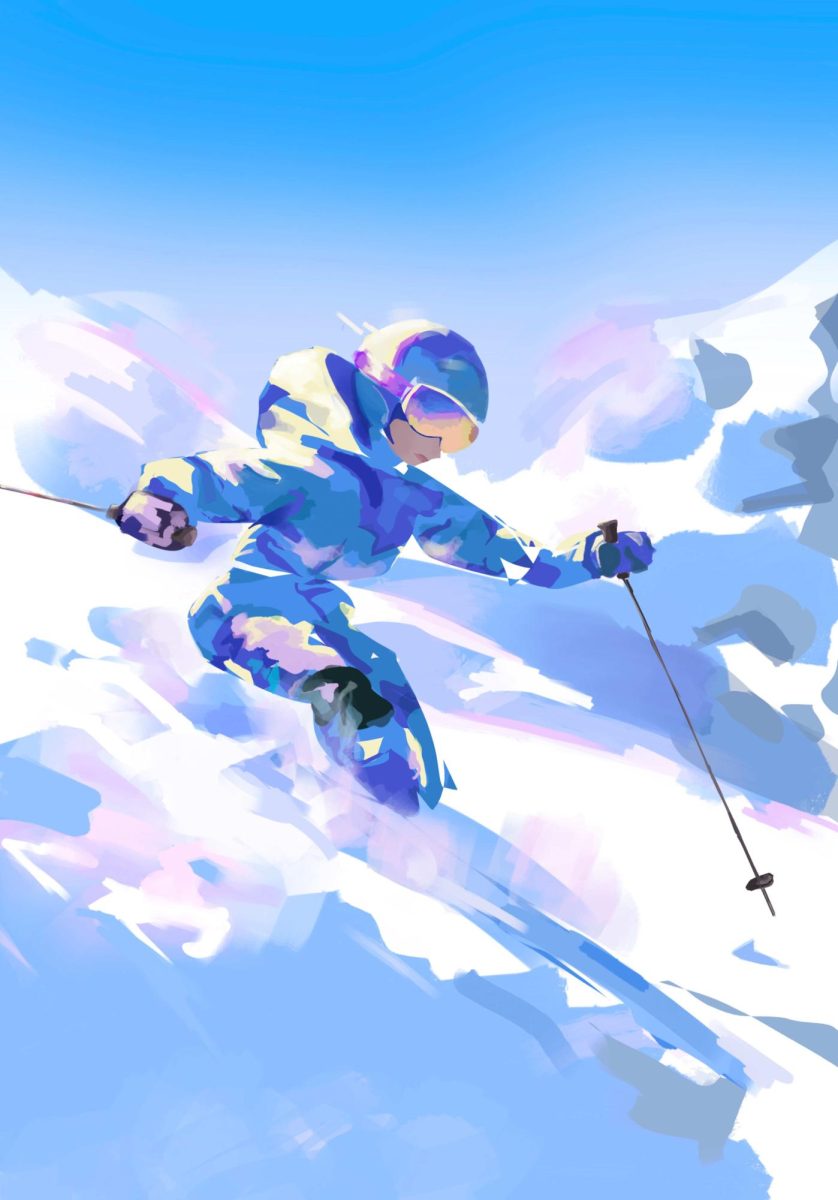
Racing down mountains, scaling cliffs, and braving ocean currents — high-risk, adrenaline-filled sports have stolen the attention of Paly students as excitement towards these activities continues to rise.
A ScienceDirect article found that extreme sports are continuously attracting the attention and interest of the youth. In general, the main participants of these sports seem to be drawn to the high risk and adventure.
In a more scientific angle, people are attracted to the rush of adrenaline that comes with these activities.
According to Palo Alto High School sports medicine teacher Stacey Kofman, adrenaline is a hormone that is produced from the adrenal glands, above the two kidneys, that stimulates our body’s fight or flight responses.
“When we’re scared of something, we have that heightened sense that heightens the response of some things wrong,” Kofman said. “We increase our breath rate, our blood pressure starts to increase and our heart rate starts to increase.”
The hormone, adrenaline, is produced when the brain senses danger. Conversely, many people pursue activities that will get them the boost of that hormone. According to a study done in 2017 by researcher Kent Berridge at the University of Michigan, people enjoy the feeling of danger not only from adrenaline but also dopamine, as it creates a thrilling mix of fear and excitement when we know we are safe.
“There’s a lot of people who like that feeling in their body,” Kofman said. “Think about it when you go on a roller coaster, slowly going up and you anticipate that, and then all of a sudden the bottom drops out and you get that feeling, that rush. That’s controlled. You know what you’re in for.”
Teenagers in particular are drawn to thrill-seeking or high adrenaline activities, partially because their brains are not yet fully developed. According to Odette Hornby et al., there’s an exponential increase in teen participation in extreme sport due to the expansion in media coverage in the past decades.
“It’s a lot of nerves and excitement when you’re staring down the mountain,” freshman Nova Westin said. “I’ve been skiing since I was three, and I still get a thrill every time I go.”
The rush and excitement caused by adrenaline also translate to risk-taking. For teens, their underdeveloped brains make them less afraid and more willing to try different things.
“I think they go hand in hand,” Kofman said. “The riskier it is, for some people, the more they want to do it. … People, once they get over their fear of trying something and they realize it wasn’t that bad, and they survived it, are more willing to do it again.”
In some circumstances, this can be beneficial. According to the National Library of Medicine, risk is not limited to unsafe behavior, and taking risks is actually a necessary part of adolescence. These are referred to as healthy risks, meaning they benefit a person’s wellbeing, they carry mild potential costs, and they are generally socially acceptable.
Some types of healthy risks include enrolling in a challenging course, participating in sports, and public speaking. These activities help adolescents exercise their independence and promote positive health outcomes.
Unfortunately, despite the opportunity for growth and experimentation that comes with trying new things, adolescents can be negatively affected by adrenaline as well.
The adrenal glands are triggered in stressful situations, and the National Library of Medicine found that constant stress can lead to an increase in risk taking.
This increase could draw adolescents towards dangerous activities like extreme sports.
These sports have high risks, potential injuries, and physical challenges, yet people continue to participate in them.
“I’ve gotten injured multiple times,” Westin said. “But that hasn’t stopped me from skiing.”
People often face withdrawal symptoms stepping away from extreme sports. According to a study done by Odette Hornby, some experience anhedonia (inability to feel pleasure), craving and negative effects when not participating. Thus, there needs to be a balance between chasing excitement and remaining safe and responsible.
“It’s a catch, right?” Kofman said. “You want to have some autonomy in the activities you’re doing. But let’s find some healthier alternatives.”
Finding a way to combat negative risk taking is not always easy or straightforward. A study from the National Library of Medicine found that reducing this behavior comes from increasing a person’s self-control, sense of power, and by developing positive goals.
These solutions are almost entirely mindset changes, meaning that an individual must do most of the work alone in order to help themselves, but there are still ways to support those you know.
For example, introducing a struggling teen to alternative sources of adrenaline could help mitigate dangerous behavior. Activities such as riding roller coasters or going ziplining can provide a similar rush of adrenaline without the high risk.
Despite the danger and safer alternatives, teenagers will likely continue to seek out high adrenaline sports, and injuries are bound to come with them. The most important part is to remain aware of the consequences that come with any extreme sport.
“We have to realize that maybe some of these things we’re doing are risky,” Kofman said. “And that’s why, for some of these sports, waivers are important […] and you understand what you’re getting yourself into.”
