The boundary between artificial intelligence and the physical world is dissolving. San Francisco startup OpenMind is betting that the next intelligent robots won’t only live in a chat box, they will walk through streets, notice and act freely.
Even as companies race to build more advanced machines, the real missing piece is the software that lets robots interpret their environment and work side by side. Today, robots generally operate on their own, with no simple way to share what they’ve learned or team up with machines built by others.
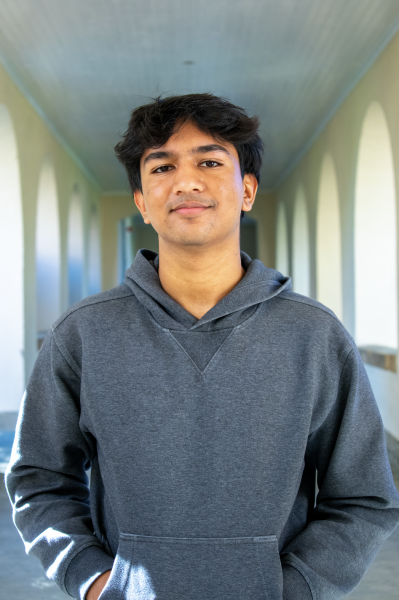
Paly Junior Reed Truong, a member of Paly Robotics, said the unified approach could reshape how teams build and program machines.
“OpenMind is creating a system where everything is integrated and is running off the same software so I think it’d be really efficient because everything is built off the same architecture and can talk to each other, which is really useful and unique,” Truong said.
OpenMind is positioning itself to solve that gap with two products: OM1, the company’s open-source operating system, and FABRIC, a decentralized coordination network. OM1 serves as the “brain” — a hardware-agnostic intelligence layer that can run on humanoids, quadrupeds, drones, and other platforms. FABRIC forms the “nervous system,” giving robots a way to identify themselves, exchange information securely, and collaborate across different environments.
Founder and CEO of OpenMind Jan Liphardt said OM1 Beta is designed to pull together the chaos of real-world sensory data and turn it into something robots can actually use.
“The software stack allows humanoid and quadruped robots to fuse data from many sensors, build a picture of the world around them in terms of rooms, objects, people, audio and other data inputs,” Liphardt said.
Once a robot understands its surroundings, Liphardt said the system hands decision-making off to large language models.
“Then we turn over the keys to large language models,” Liphardt said. “Instead of a large language model simply generating text, we directly connect it to a fully functional autonomous humanoid, allowing the large language model to roam free in parks in San Francisco.”
For students who work with less advanced hardware, the idea of a robot that can adapt to messy environments feels like a major shift. Junipero Serra High School senior and roboticist Stepan Standyk said most robots fail the moment anything unpredictable happens.
“I’ve worked on school robotics teams for years, and everything feels so brittle,” Standyk said. “You bump the robot, the lighting changes, someone walks in front of it, and the whole thing collapses. What OpenMind is doing feels different because it seems they aren’t doing script-based actions.”
Students watching the industry’s direction say the technical progress is exciting, but they aren’t ignoring the stakes.
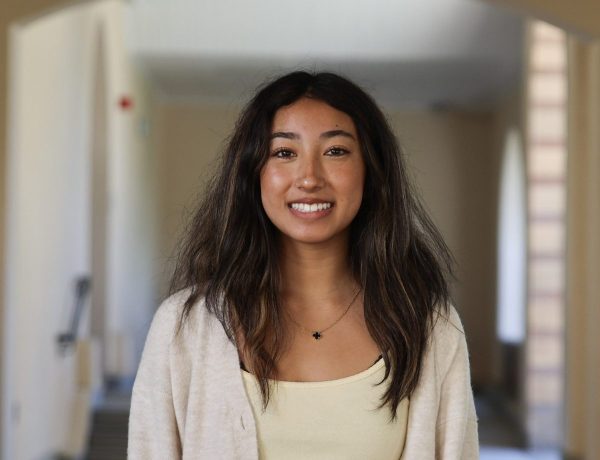
Palo Alto High School junior Jennifer Wang, a Paly Robotics member, said the coming shift raises concerns.
“After generative AI, robots are the next step, and I feel like a lot of the tasks people do every day can be automated, but it’s just a question of whether it’s ethical or not,” Yang said. “If the robot can do harm and it does do harm, then whose responsibility is it? In a court of law, can you argue that it’s the company’s responsibility for not making it properly?”
As part of its broader approach toward transparency in robotics, Liphardt said OpenMind has decided to release its software publicly, allowing developers to trust and improve the machines.
“I think it’s very important that humans everywhere have the sense that they’re able to look into the brain of the machines, figure out what’s going on, make changes, contribute, find bugs, as opposed to it being this black box, so we just open-sourced the whole thing,” Liphardt said.
Liphardt said that even if the technology accelerates quickly, humanoid robots won’t appear all at once. Instead, Liphardt said he expects a slow, steady rollout similar to the adoption of autonomous vehicles.
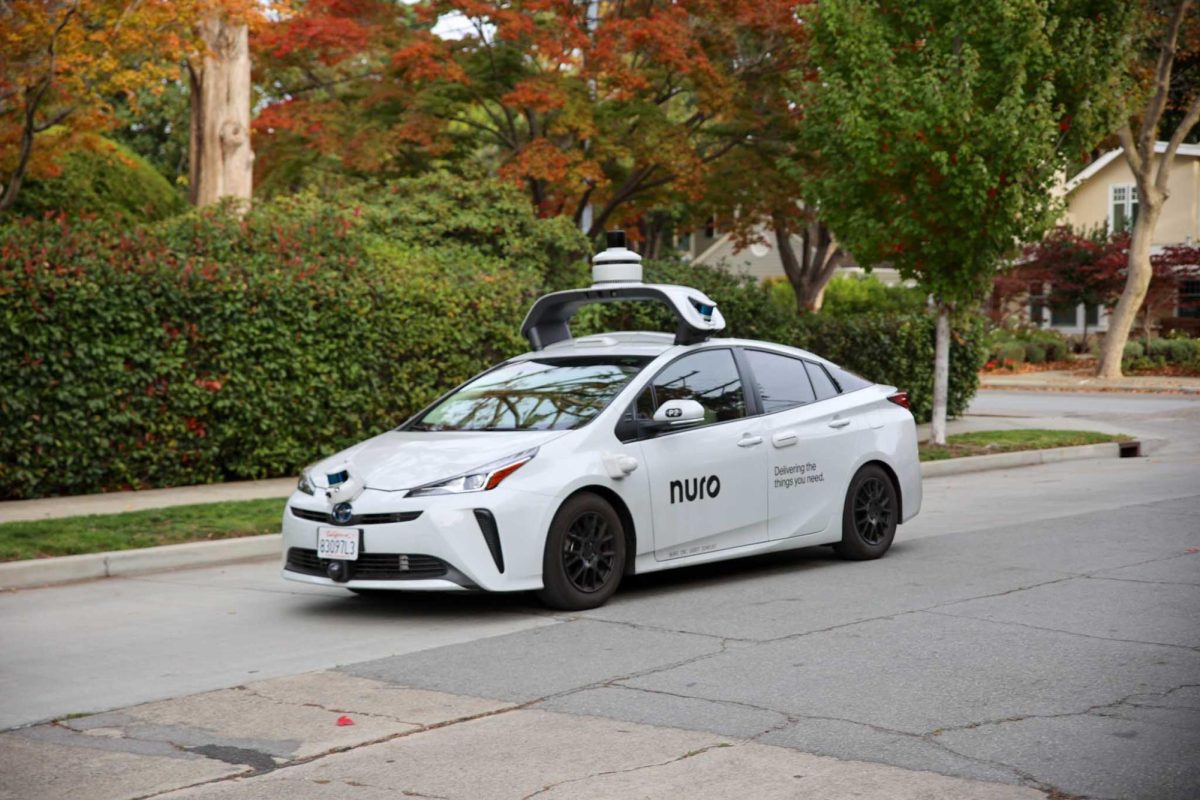
“Some people think that there’s a zero-to-one moment in humanoid robotics where there’s nothing, and then bam — all of a sudden there are a lot of humanoids, and I don’t think that’s true at all,” Liphardt said. “If you think about Waymo … that’s an example of where in one area, transportation, it’s taken a decade plus to go from the lab to an absolutely amazing technology that is many times safer than humans actually taking the wheel. That sort of story is going to play out in many, many areas.”
Early deployments, Liphardt said, will likely focus on human-interaction tasks before shifting to more complex capabilities.
“This is going to be a situation where the first humanoids are deployed into schools, households and hospitals, to do tasks focusing on engaging with humans, like vision, speech and emotion display,” Liphardt said. “Then, as things like robot hands get more reliable, then gradually more and more tasks involving more fine motor skills can also be automated.”
Standyk said he is both worried and excited about the future of robotics.
“I’m anxious to see what the future holds, both the positive and the negative, but I can’t wait to see it regardless.”