“I saw a Waymo trying to take an unprotected left turn, and it held up traffic for so long that the line of cars behind it was through the intersection behind them,” Palo Alto High School junior Vedika Argawal said as Waymo, an autonomous driving service advertising sustainable and safe rides, expanded its operation to Palo Alto and surrounding cities over the last year.
“Waymo is committed to holding safety to a higher standard,” Waymo’s website said. “We [the Waymo team] aim to offer freedom of movement for all, create a sustainable, efficient transportation ecosystem, and make the planet better than we found it.”
But is Waymo’s standard really higher than competitor rideshare services like Uber and Lyft?
According to Kristofer D. Kusano, an autonomous driving engineer at Waymo, its automated driving system across 7.14 million miles finds that ADS (automated driving systems like Waymo) had 80% fewer injury-related crashes and 55% lower police-reported crashes compared to human drivers.
Many riders, like Palo Alto High School junior Siena Siljak, feel safer taking Waymo because it strictly obeys the law and usually doesn’t make impulsive decisions.
“I feel safer because a Waymo can’t get distracted as a driver can,” Siljak said. “Also, the process is pretty easy. You just select the location you want to go, and it matches you with a ride, so there’s no confusion.”
Since Waymo is programmed to follow strict rules with no exceptions, the expansion of Waymo into cities leads to problems like holding up vehicles and blocking traffic. Paly junior Vedika Argawal experienced this effect of automated driving recently while walking in downtown Palo Alto.
“I saw a Waymo trying to take an unprotected left turn, and it held up traffic for so long that the line of cars behind it was through the intersection behind them,” Agarwal said. “In the Bay Area, especially with smaller streets like University Avenue, if there’s a gap for you to take the turn, you have to, but Waymos aren’t programmed to take the risk … They just hold up traffic until somebody stops for them.”
Siljak said Waymo offers a place for people to relax, pushing off the social pressure riders face when a human driver is present.
“I prefer Waymo over Uber,” Siljak said. “I’ve never been in an Uber alone, mostly because I don’t really feel comfortable being alone in an Uber with some random person.”
Waymo offers many other services that make the rides more comfortable. For example, the car connects to both Spotify and YouTube Music, allowing you to stream your own music during the ride, as well as adjusting temperature and “cabin theme.”
However, many riders believe the replacement of rideshare drivers is unethical. Uber currently employs over nine million drivers worldwide, while Lyft employs over two million, according to their websites.
Paly senior Reyes Aronson refuses to ride Waymo for this reason.
“It’s taking the Uber and Lyft drivers’ jobs,” Aronson said. “And I’ve never seen an Uber malfunction.”
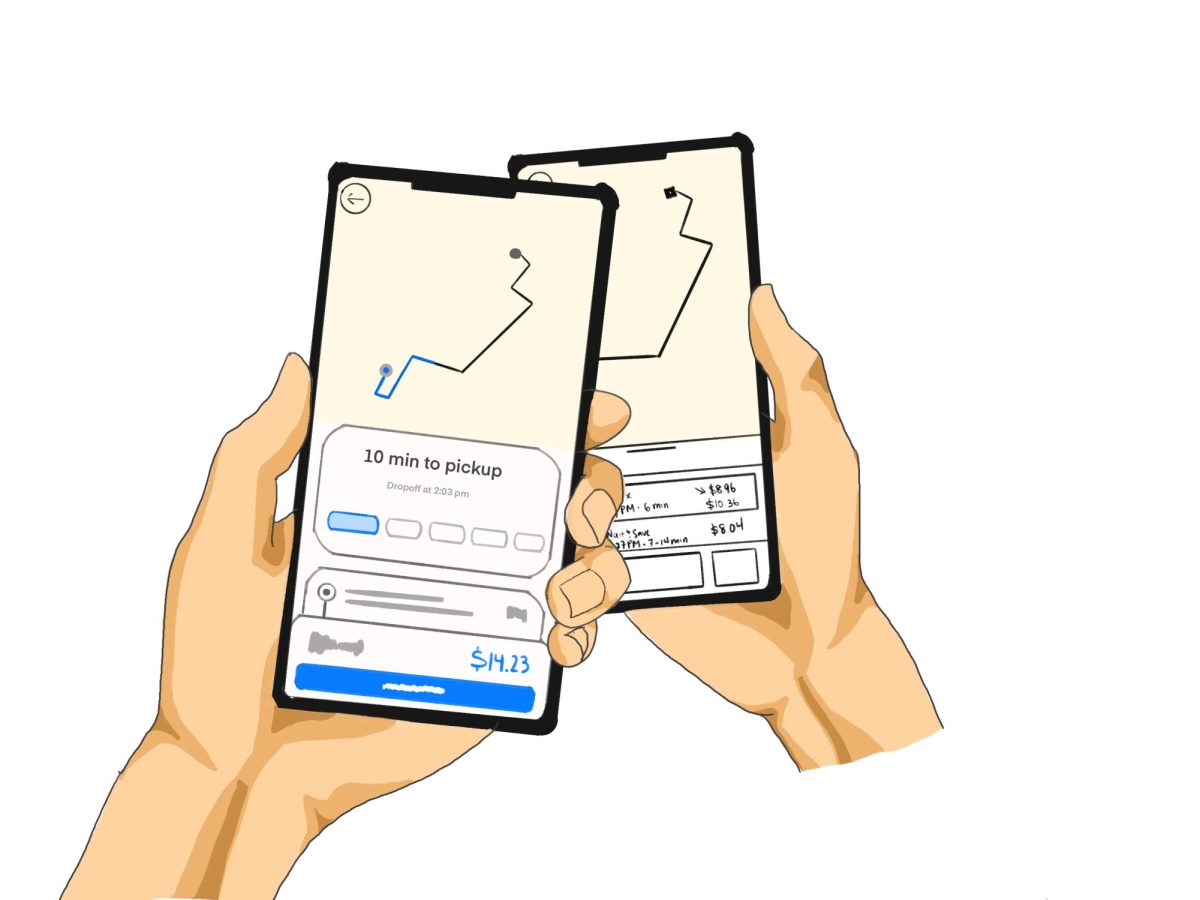
Waymo has also recently been more expensive than human rideshare services. Obi, an app that compares various live rideshare service prices, simulated more than 94,000 ride requests in the San Francisco Bay Area between Nov. 27 and Jan. 1 and found that Waymo costs an average of $19.69 for a ride, while Uber was slightly cheaper at $17.47 and Lyft averaged at $15.47.
But for Siljak, the price is worth the safety.
“I really don’t mind paying a little extra to feel safe,” Siljak said. “The rider’s comfort should be the top priority.”